
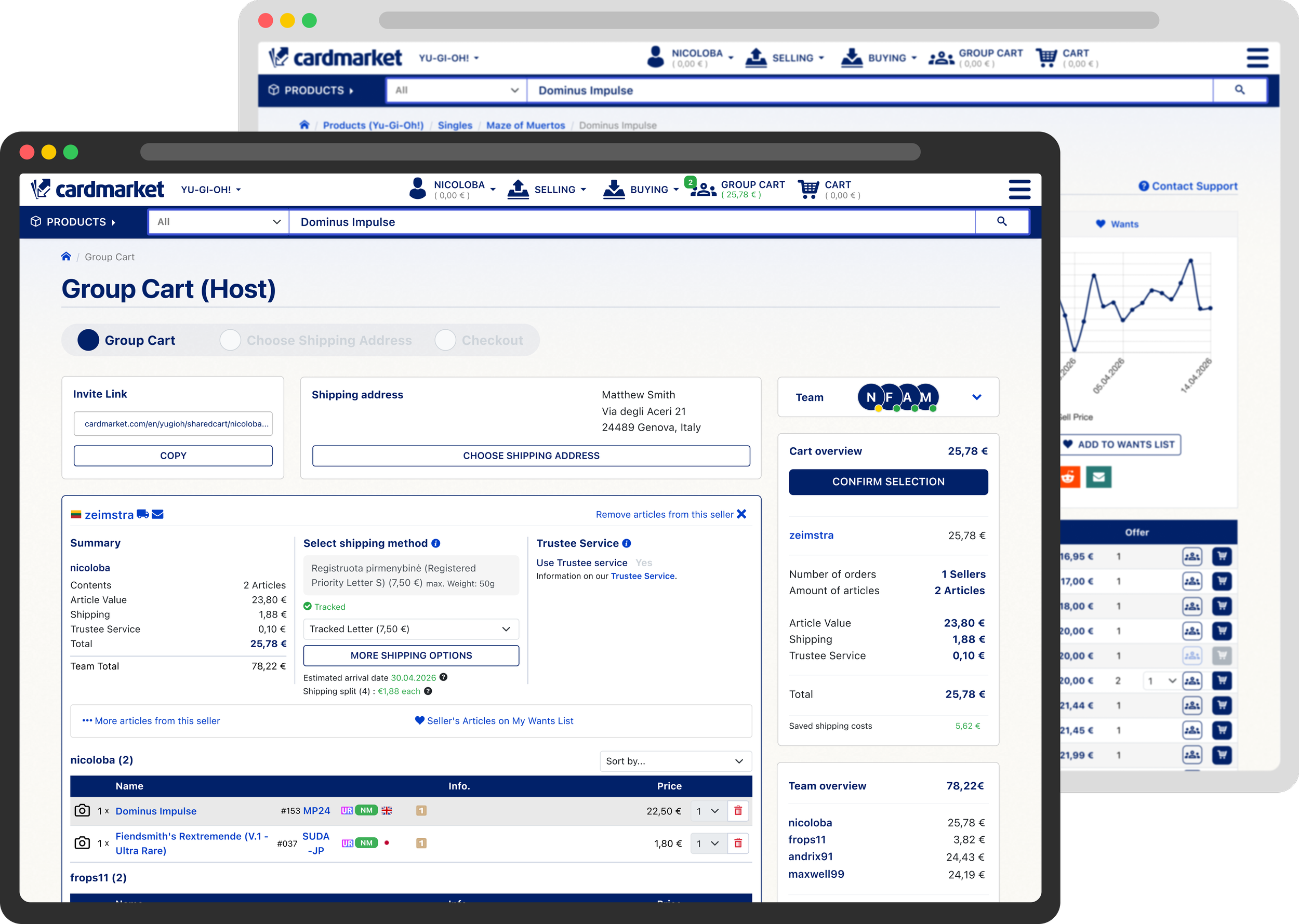
Cardmarket Group Order
Introducing Collaborative Group Buying to Cardmarket.
Cardmarket Group Order is a collaborative feature enabling users to synchronize and manage shared purchases directly on-platform.
My role: Lead UX Designer
Project duration: 3 Weeks
Tools: Figma, Adobe Suite, Google Suite
Year: 2026
What is Cardmarket
Cardmarket is Europe’s largest peer-to-peer marketplace for Trading Card Games (TCG). It serves as a data-heavy marketplace where users across Europe can securely buy and sell collectibles within a highly regulated trading environment.
User Research
Due to the nature of this project, working on an already existing product, I decided to conduct a qualitative-focused questionnaire to collect both qualitative and quantitative data.
Goal: to identify pain points in the current “informal” group buying habits and validate the need for a native solution.
Participants: 6 active Cardmarket users
Key Insights
1) 100% of the participants have already placed an order with a friend/acquaintance.
2) 100% of the participants would be interested in a way to manage “shared orders” directly on the website.
Pain Points
The headache of splitting costs and tracking debts.
Financial friction
The struggle of adding everyone's cards.
Tedious Manual Entry
The difficulty of finding common sellers that have everyone's cards.
Discovery roadblocks
User Personas
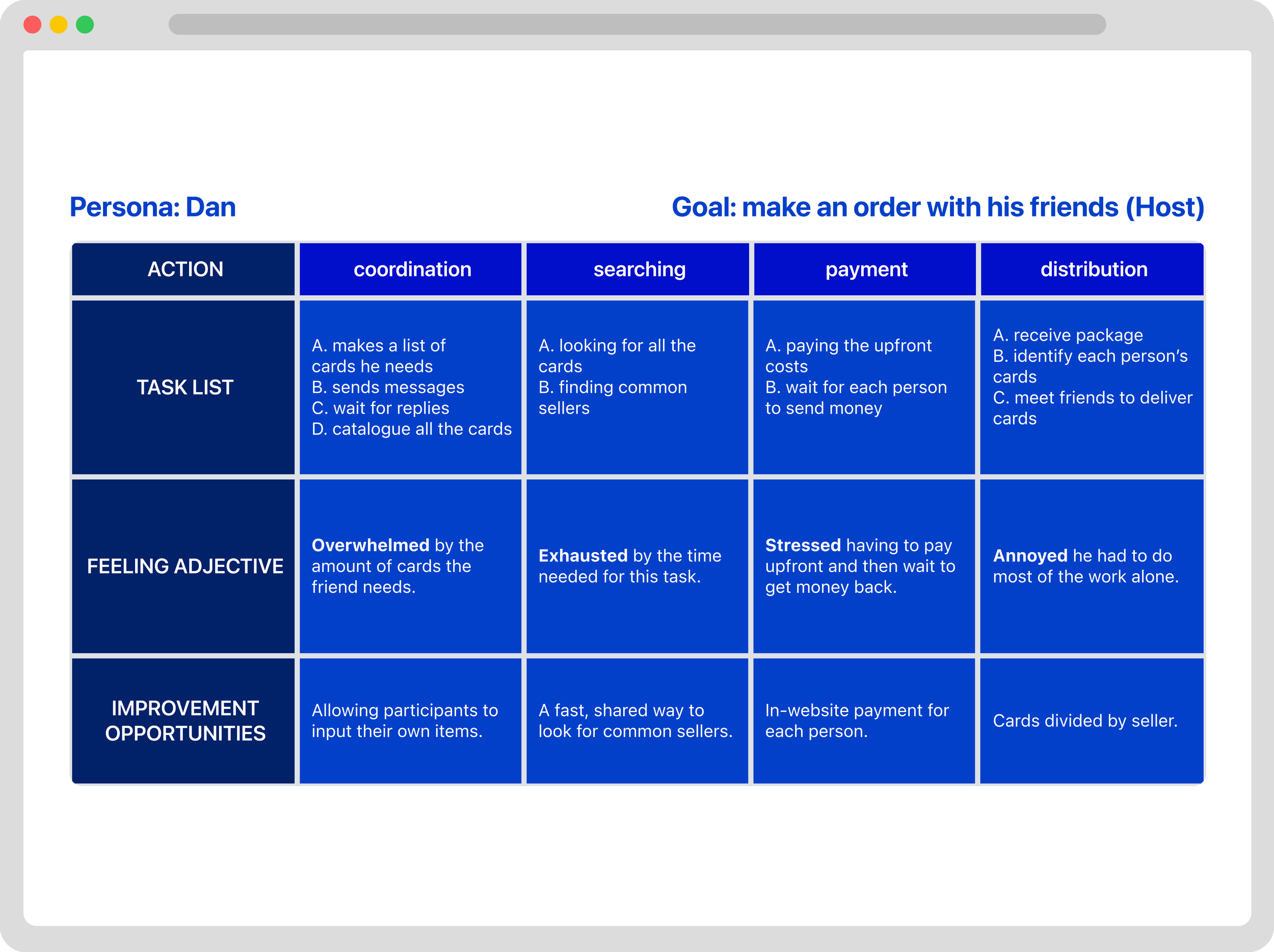
Dan
22 years old
Genoa, Italy
Engineer Student
“I spend too much time adding all the cards to the cart”
Goal
Spending less time creating the complete list of cards to buy
Paying only his part of the order
Frustrations
Having to add all of his friend’s cards to the cart
Always paying upfront the order for everyone
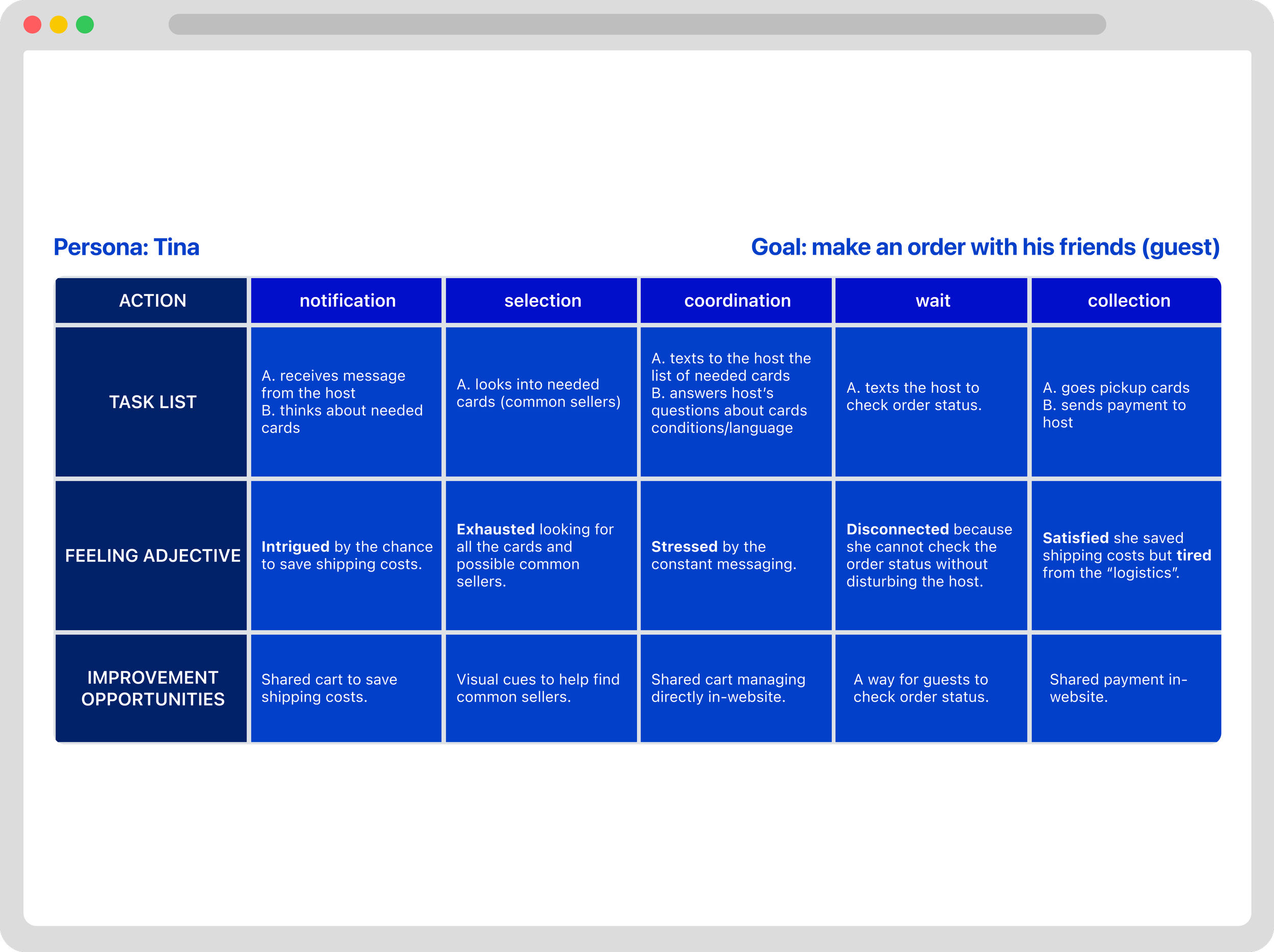
Tina
31 years old
Madrid, Spain
Digital Illustrator
“Shipping costs have become too high to sustain on my own”
Goals
Save shipping costs
Easily find common sellers with friends
Frustrations
Having to pay shipping costs alone
Spending too much time finding common sellers when ordering with friends
User Journeys
Competitors
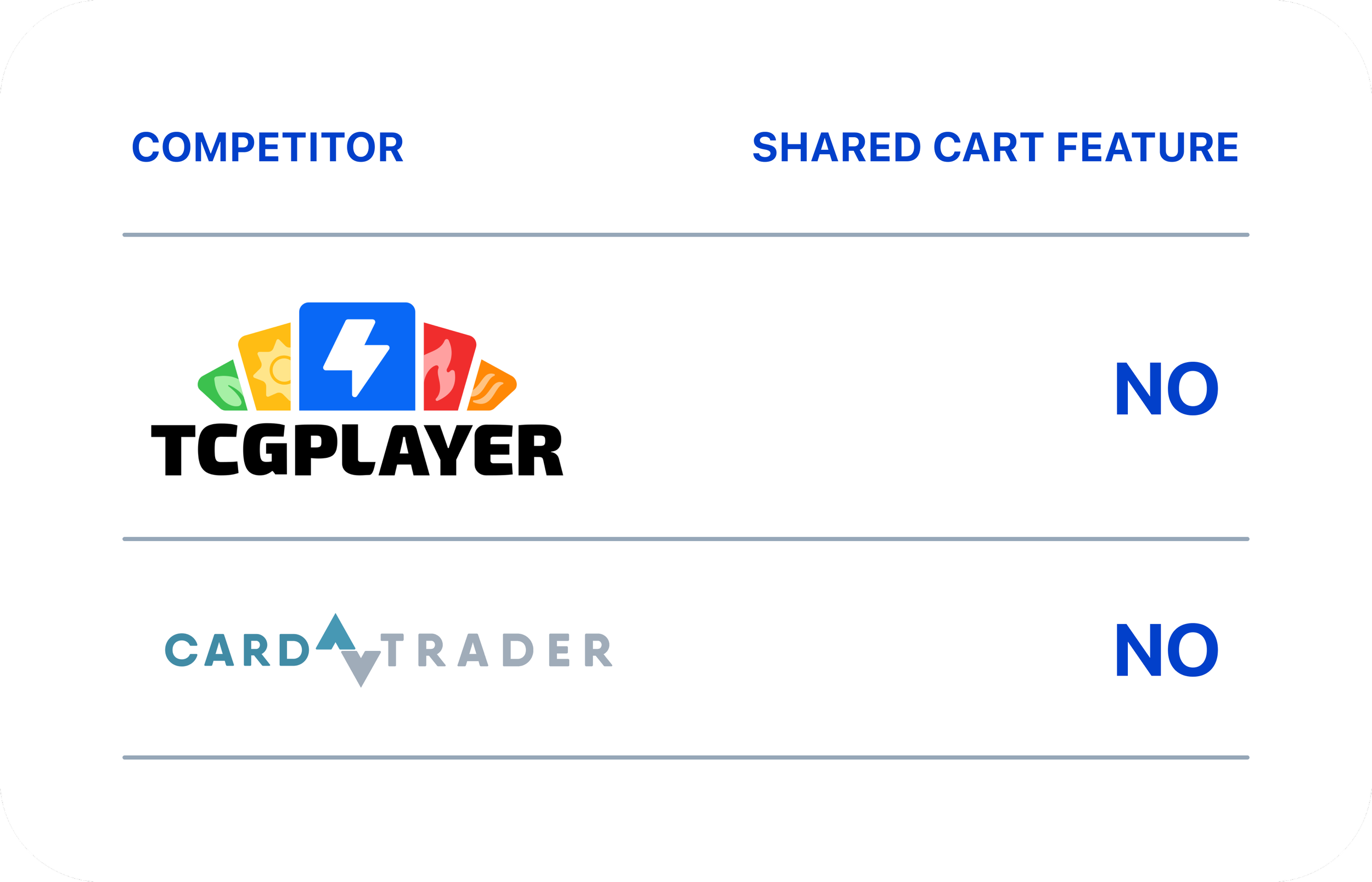
Because direct competitors lacks native collaborative tools, I conducted a Cross-Industry Competitive Audit. I analyzed how platforms like food delivering and collaborative apps manage group hierarchies and how payment apps handles peer-to-peer financial friction.
Design
User Flow
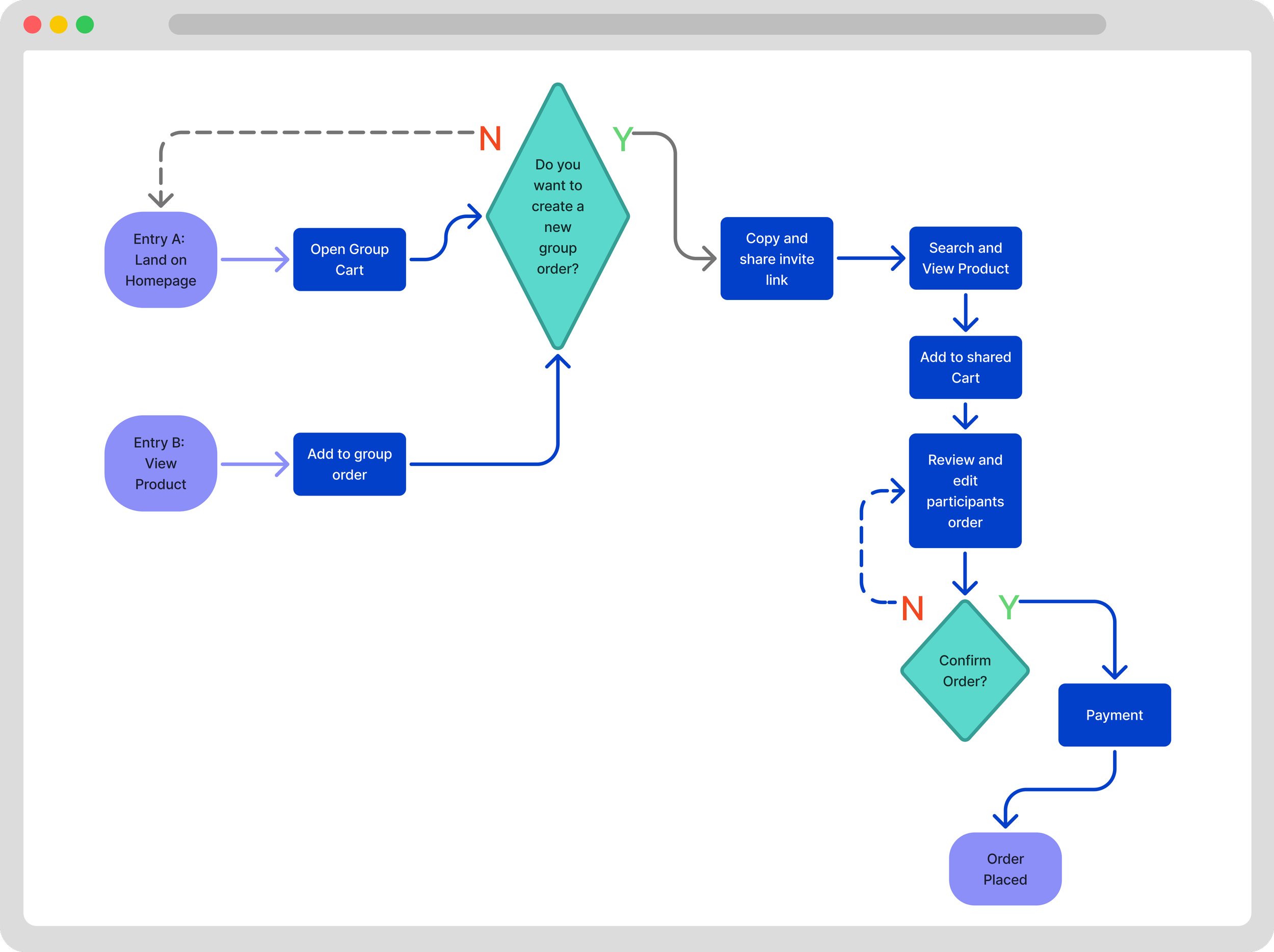
User Flow A: place a group order (Host)
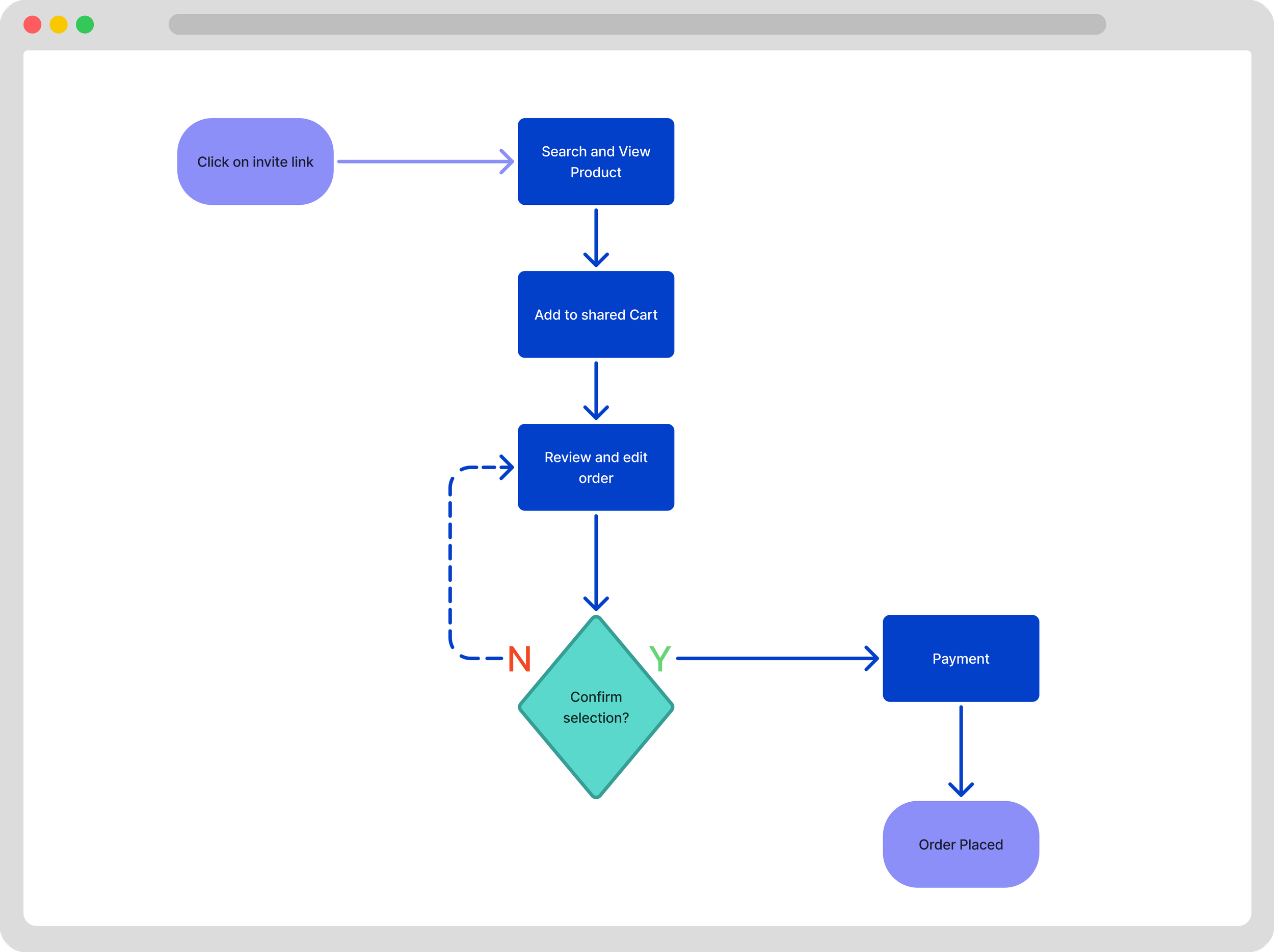
User Flow B: place a group order (Guest)
-
The design phase began with mapping the user flow, with a primary focus on seamlessly integrating the feature into Cardmarket’s established infrastructure. My goal was to leverage familiar design patterns to minimize cognitive load, ensuring that frequent users could adopt the collaborative cart intuitively and without a steep learning curve.
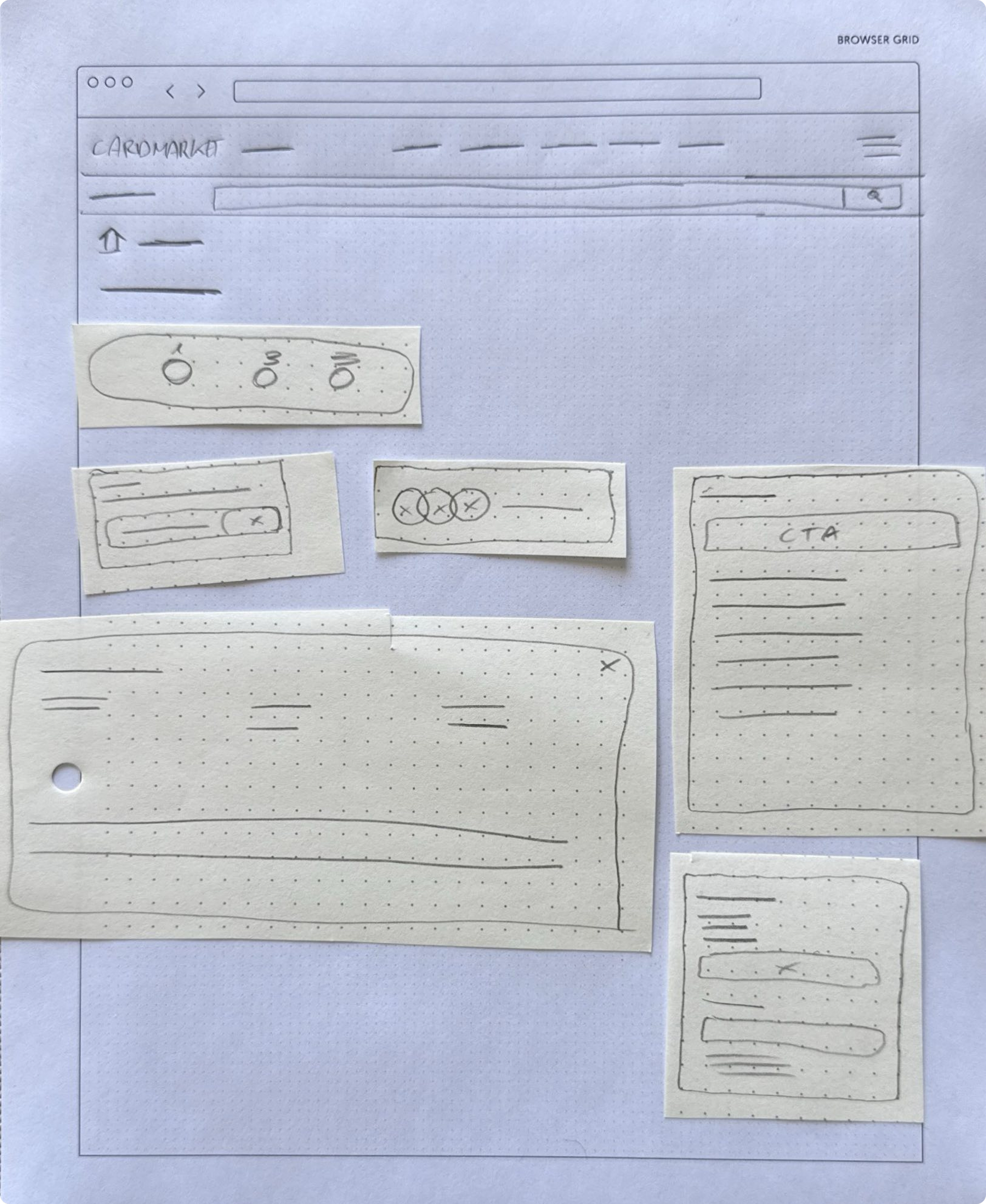
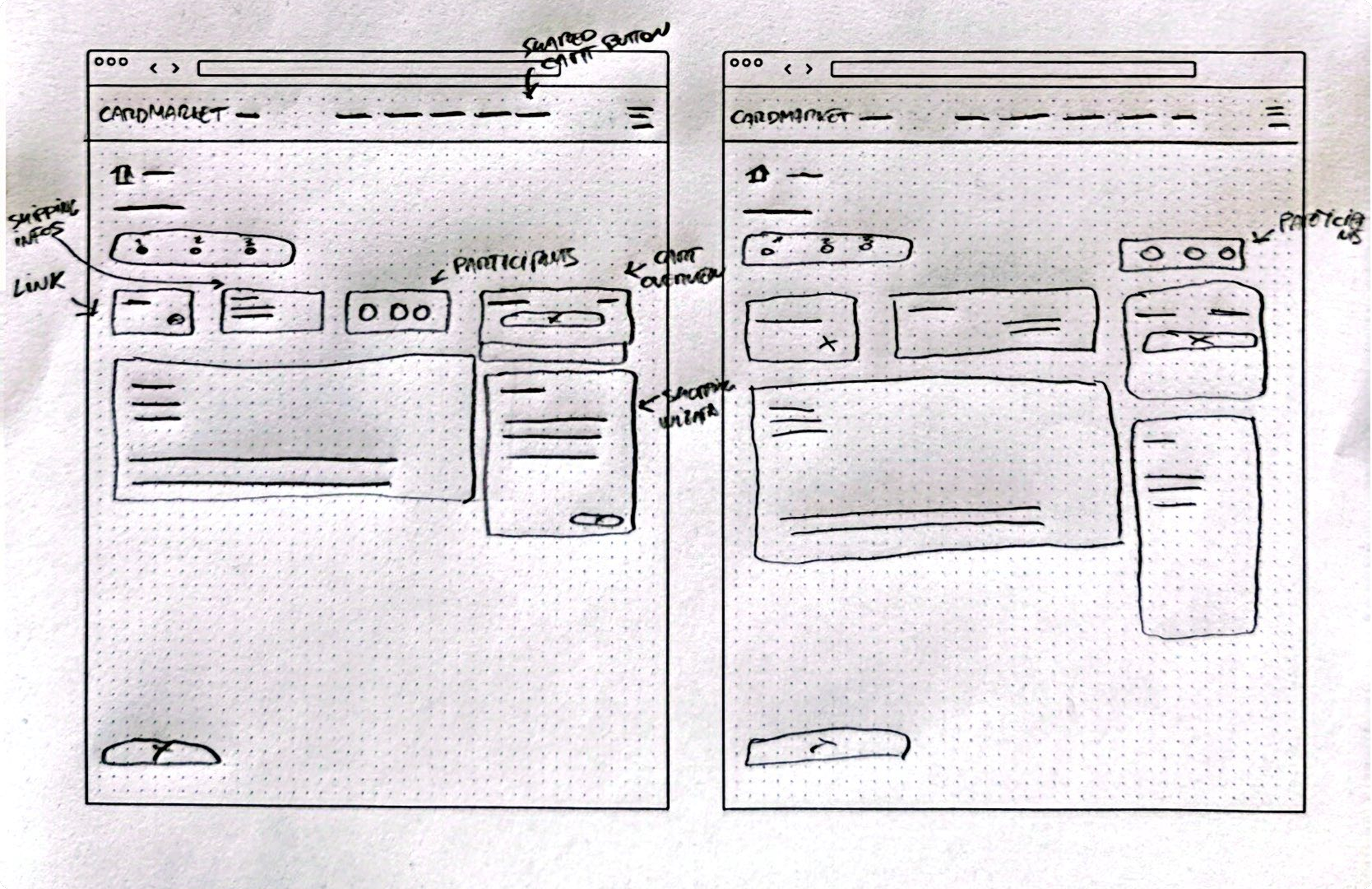
Paper Wireframes
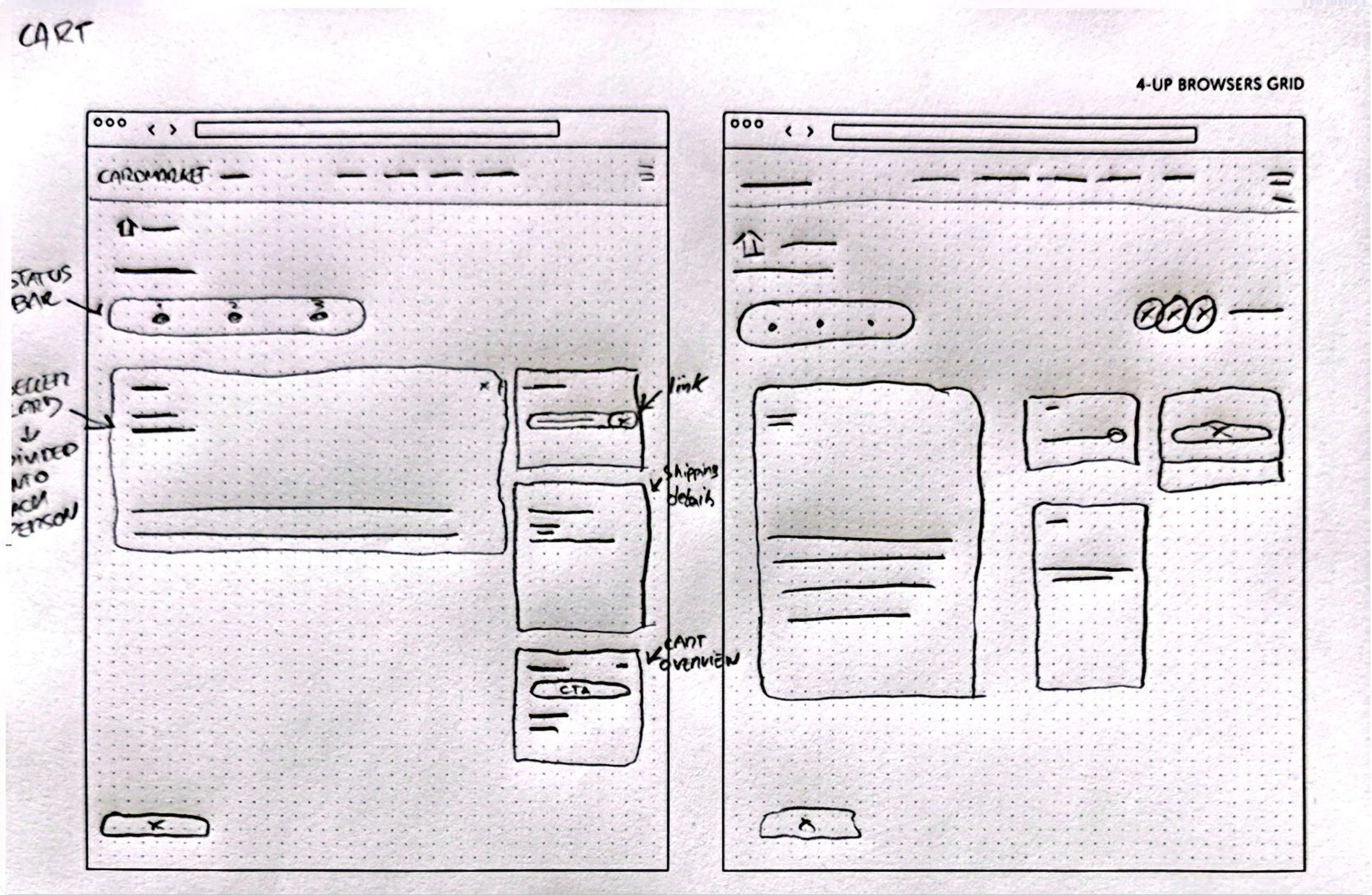
Digital Wireframes
During the ideation phase, I moved from paper sketches to low-fidelity digital wireframes with a targeted focus on the Shared Cart, the central hub of the new feature. My approach was one of evolution rather than revolution; I retained the structural DNA of the standard Cardmarket cart while layering in the collaborative elements identified during research.
During the ideation phase, I moved from paper sketches to low-fidelity digital wireframes with a targeted focus on the Shared Cart, the central hub of the new feature. My approach was one of evolution rather than revolution; I retained the structural DNA of the standard Cardmarket cart while layering in the collaborative elements identified during research.
Hi-fi Wireframes
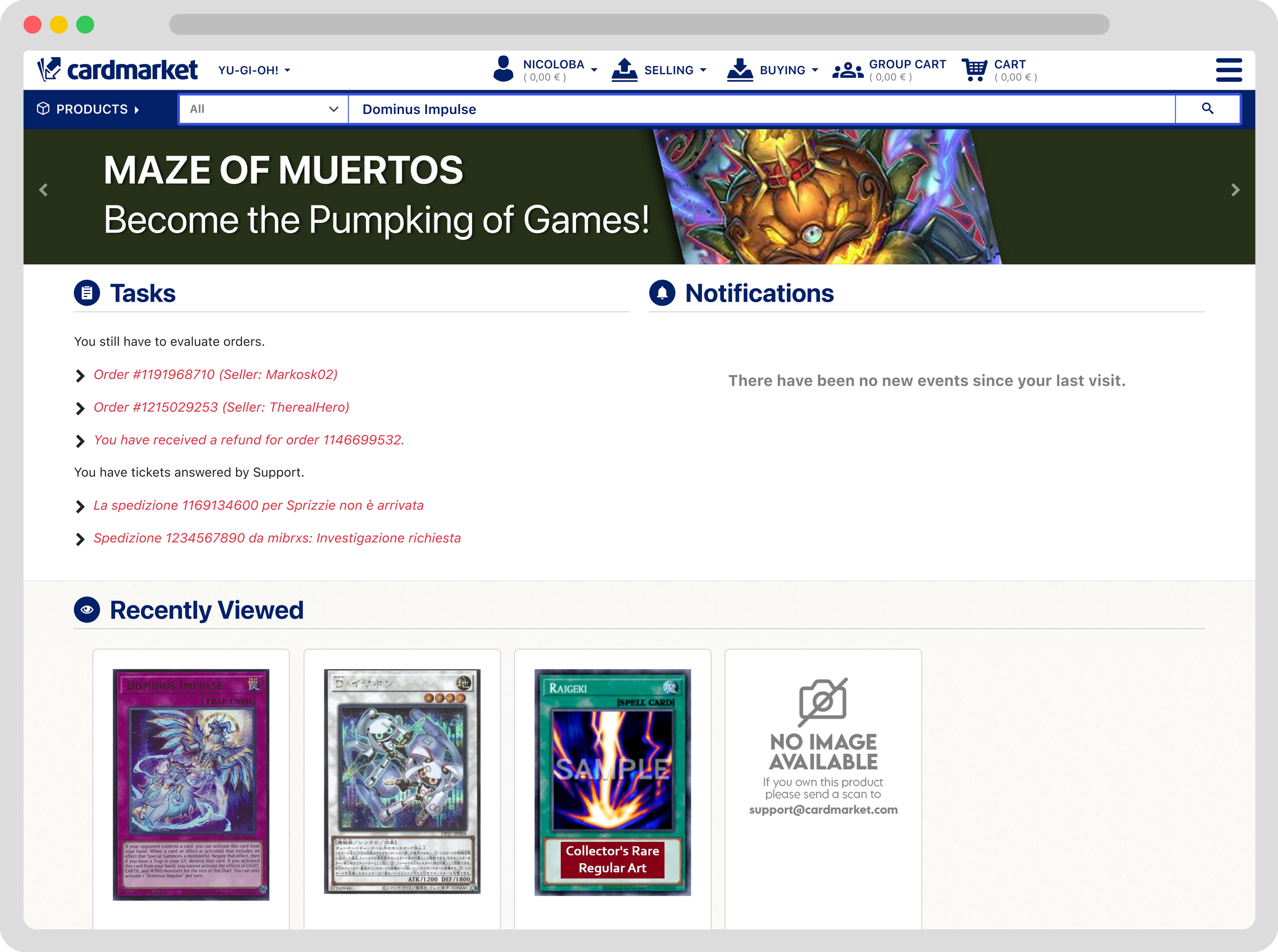
Homepage
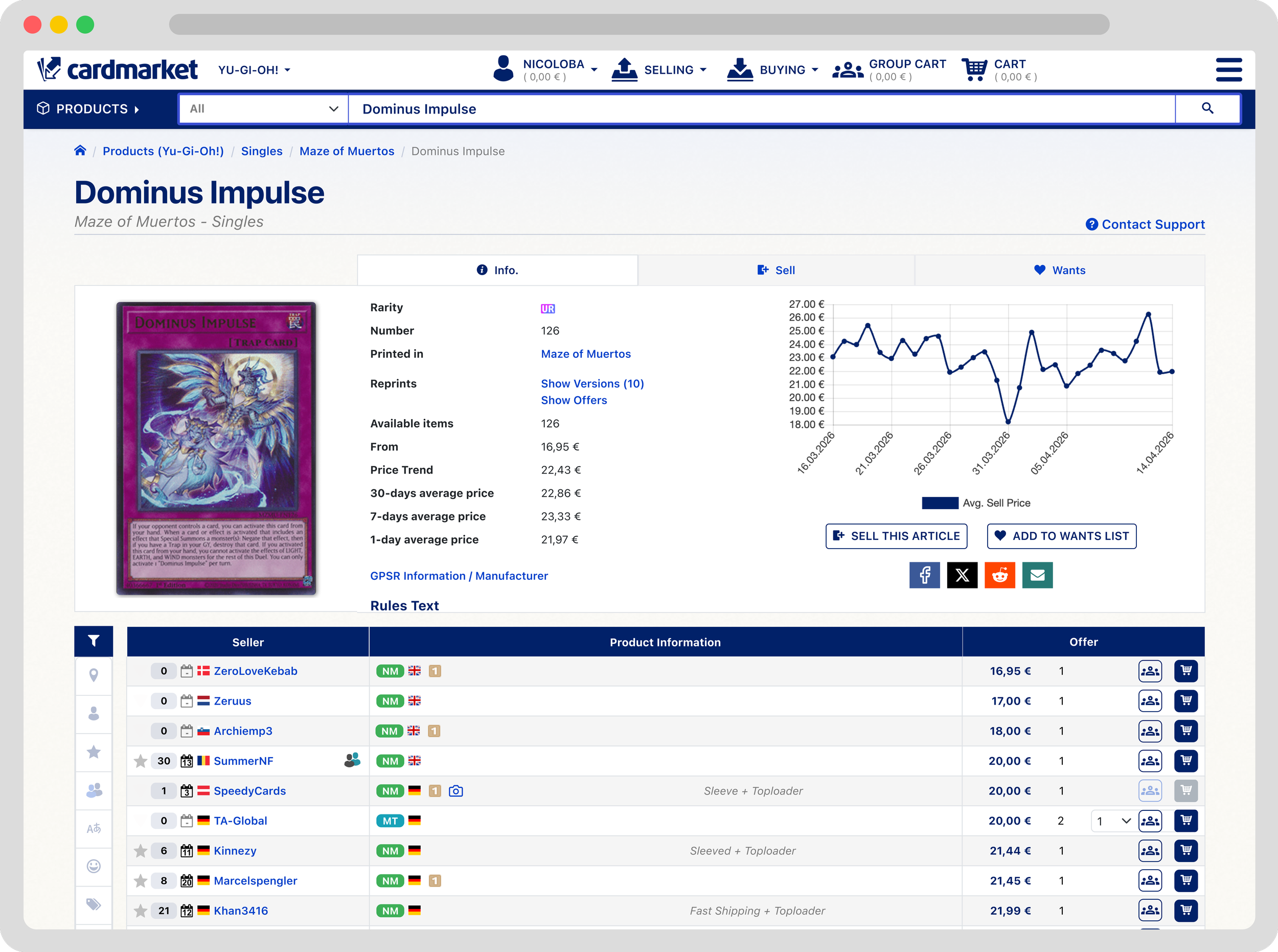
Product Page
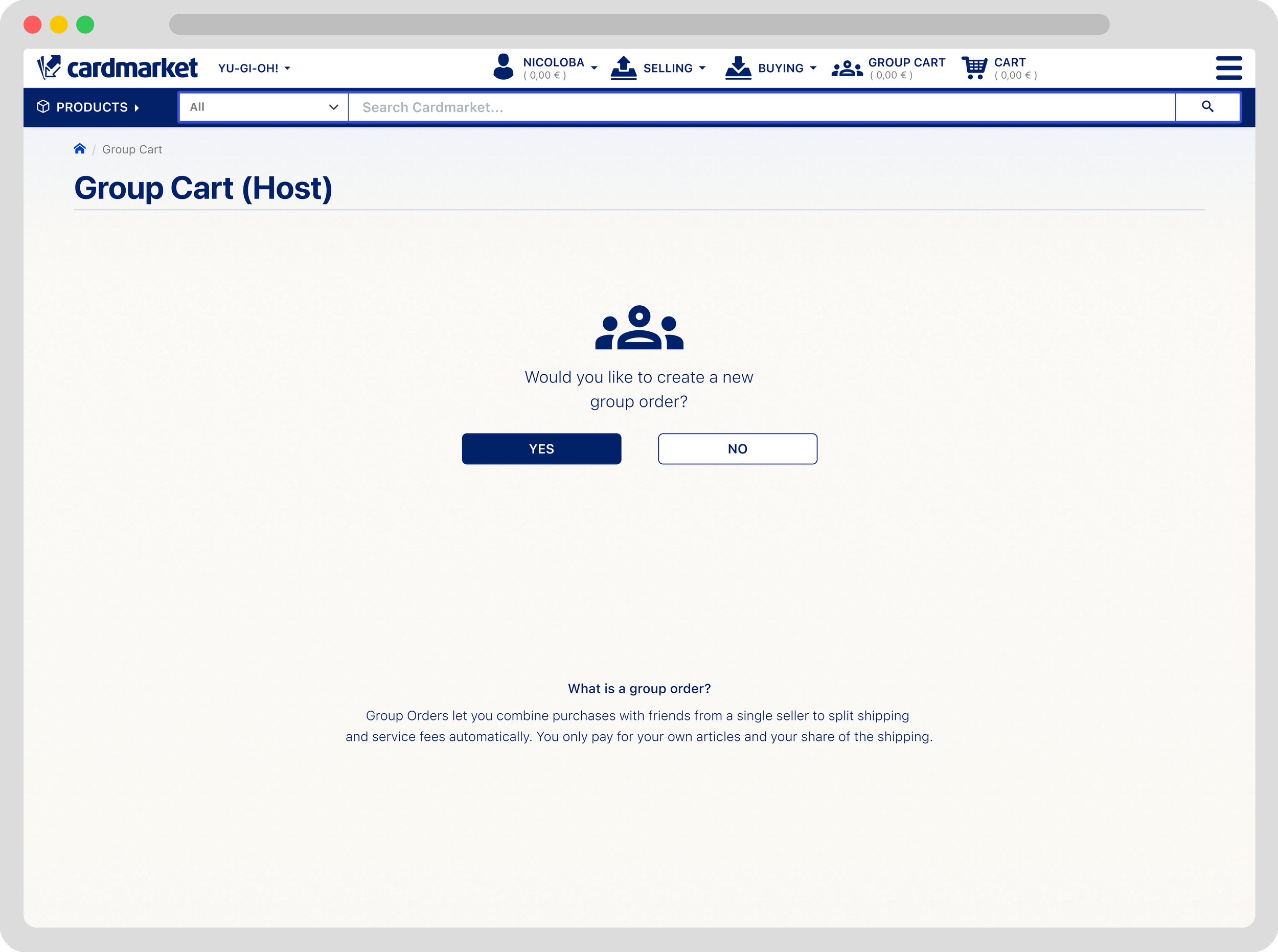
Host Cart Creation
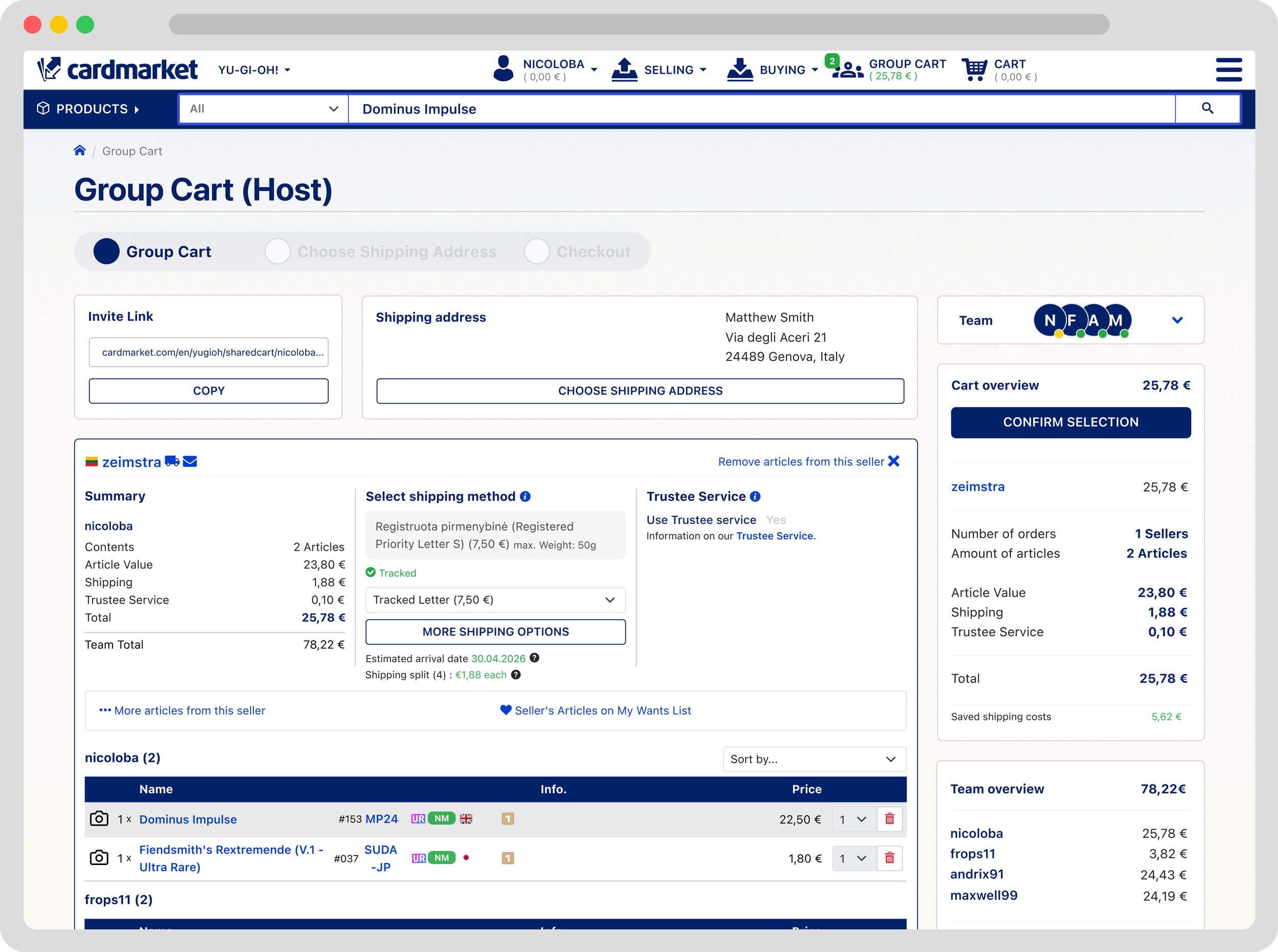
Group Cart (Host)
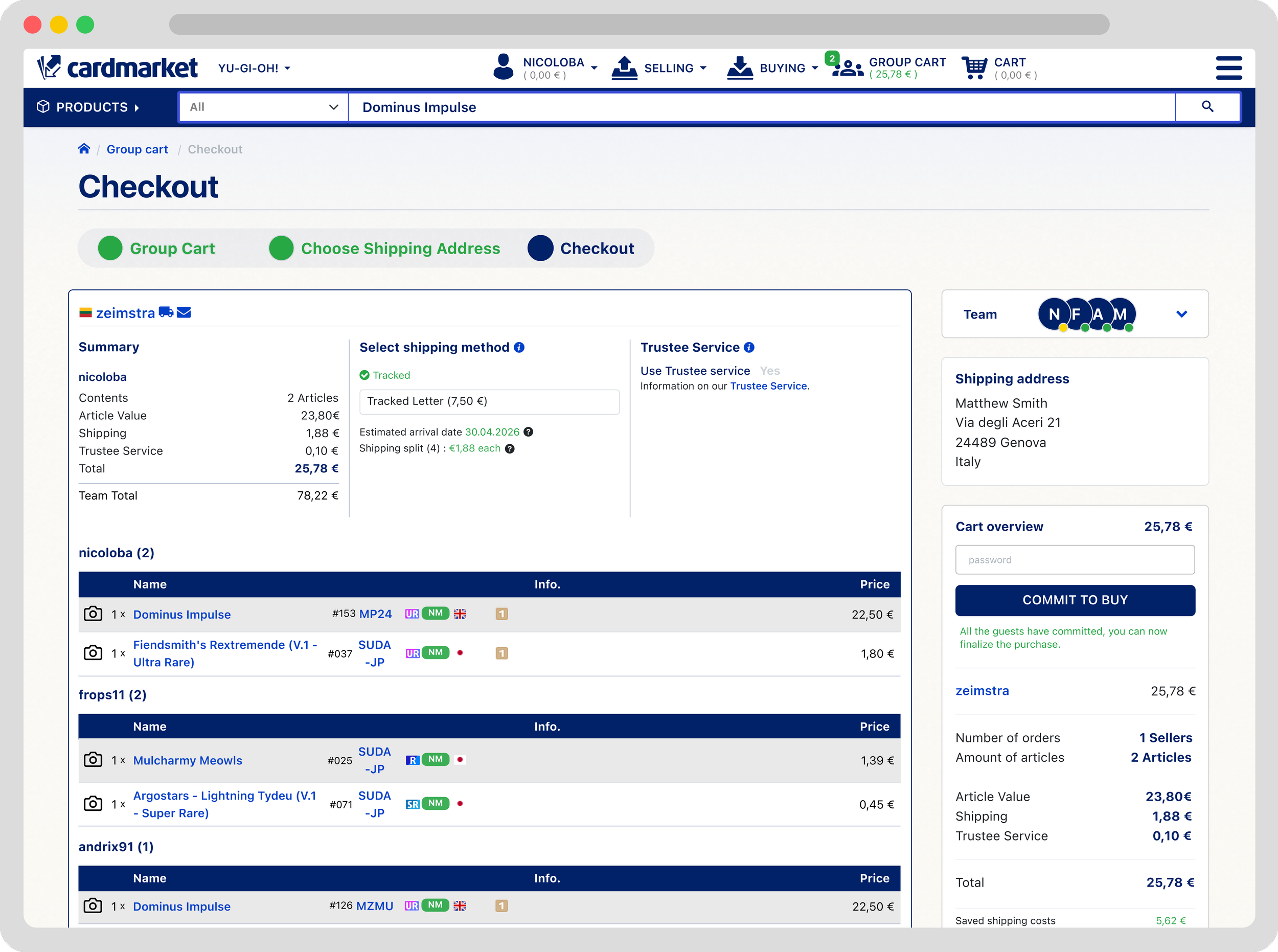
Checkout (Host)
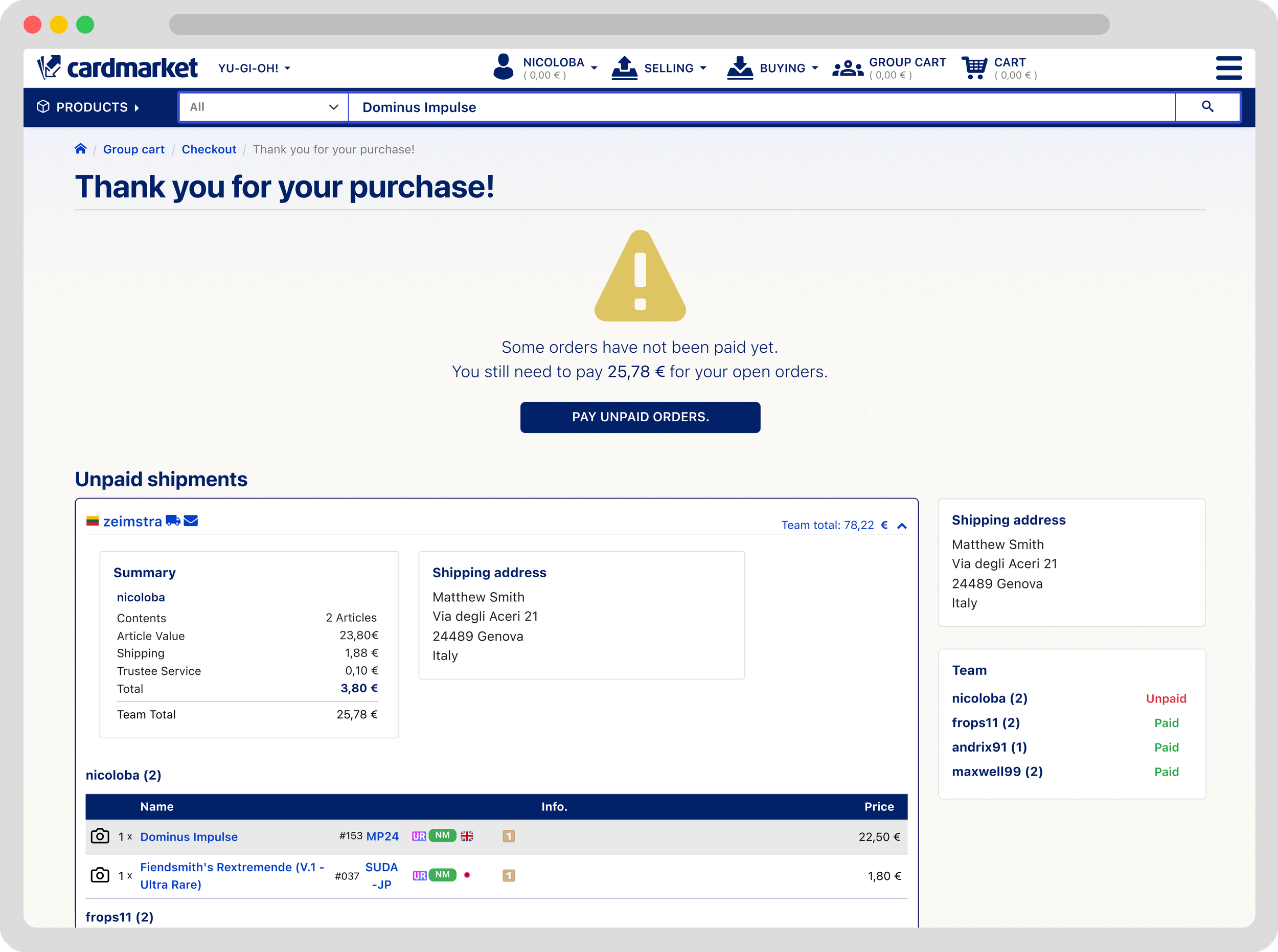
Unpaid Orders (Host)
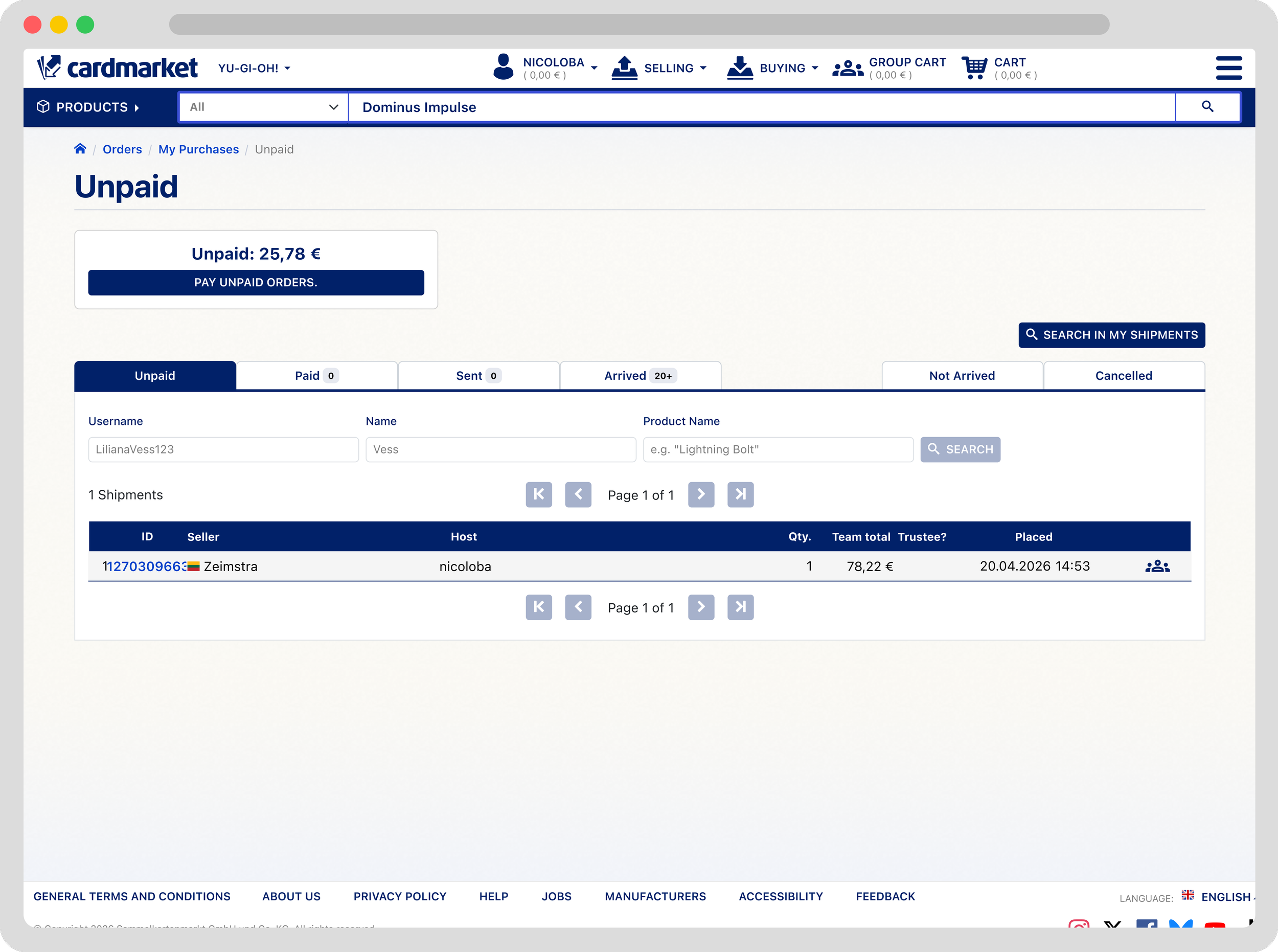
Check Group Orders
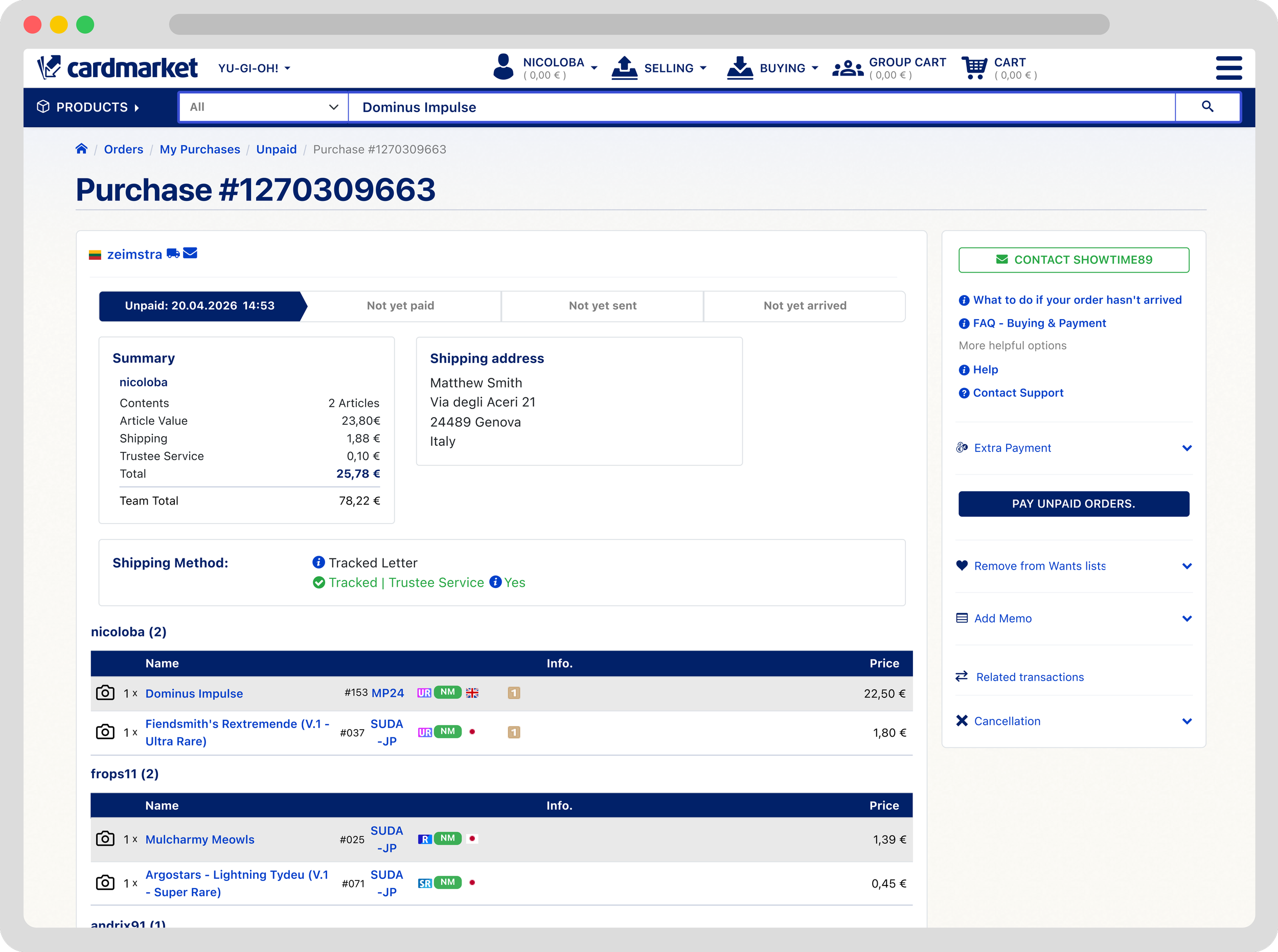
Order Status
Homepage
Product Page
Host Cart Creation
Group Cart (Host)
Checkout (Host)
Unpaid Orders (Host)
Check Group Orders
Order Status
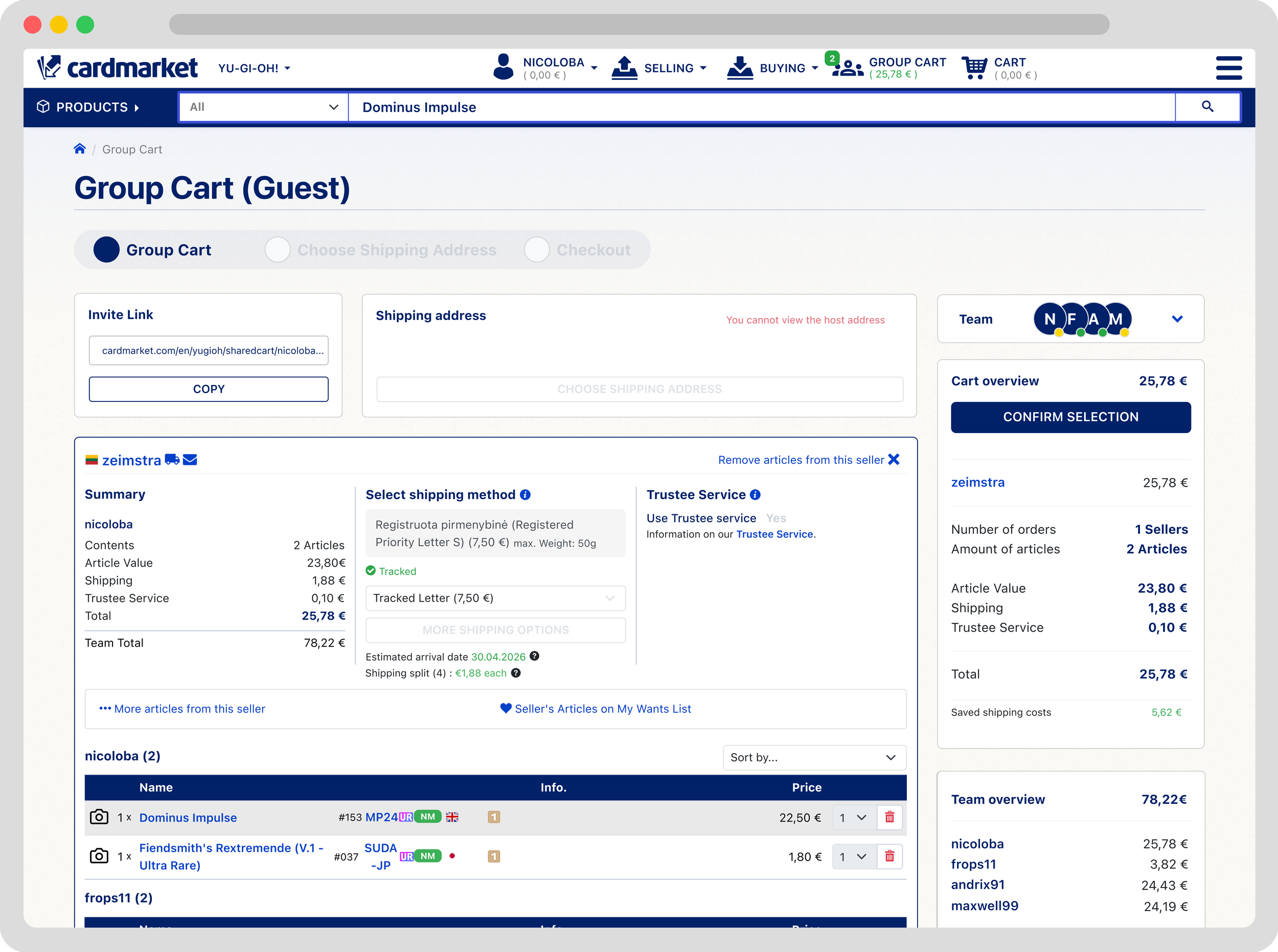
Group Cart (Guest)
Please click on the button if you would like to try the prototype!
Usability Testing
In order to validate the changes and additions I’ve made to the existing website I’m currently conducting a usability study with the 6 users that completed the questionnaire during the research phase.
Task 1: complete a group order as Host
Task 2: complete a group order as Guest
Results: test currently underway. Findings will be used to inform the next iteration.
By lowering the “shipping costs barrier” the platform can expect an increase in order frequency and user retention without negatively affecting revenues. Beyond the logistical savings, this collaborative hub encourages a deeper sense of community, positioning Cardmarket as an innovator that directly addresses the real-world behavioral habits of TCG collectors.
Through this project, working on an established platform like Cardmarket I learned the importance of working within constraints and prioritizing familiarity. I’ve also taken a step forward in user research, preparing and analyzing a questionnaire that shaped how the project came to be.
The next steps I would take are designing the group order feature for mobile devices and implementing the already existing Shopping Wizard tool to the collaborative hub.
Takeaways
Impact
By lowering the “shipping costs barrier” the platform can expect an increase in order frequency and user retention without negatively affecting revenues. Beyond the logistical savings, this collaborative hub encourages a deeper sense of community, positioning Cardmarket as an innovator that directly addresses the real-world behavioral habits of TCG collectors.
What I’ve learned
Through this project, working on an established platform like Cardmarket I learned the importance of working with constraints and prioritizing familiarity. I’ve also taken a step forward in user research, preparing and analyzing a questionnaire that shaped how the project came to be.
Next Steps
The next steps I would take are designing the group order feature for mobile devices and implementing the already existing Shopping Wizard tool to the collaborative hub.
*Shopping Wizard is an automated optimization engine designed to find the most cost-effective combination of sellers for a specific list of cards.
Thank You!
〰️
Thank You! 〰️
Disclaimer: This project is a personal case study for educational purposes. I am not affiliated with, employed by, or endorsed by Cardmarket.com. All trademarks and brand assets are the property of their respective owners.